Abstract: This study of religions analyses and accurately deconstructs the phenomenon of semantic appropriation and deep „cannibalization“ of the conceptual apparatus of ancient gnosis in the environment of modern esotericism, pop culture and the New Age movement. On a sample of key terms, supported by verifiable primary texts from Nag Hammadi and the international scientific apparatus, the thesis demonstrates the abyss between the original cosmological, soteriological and existentially overwhelming function of these concepts and their current commercially flattened, psychologized or ufologized caricature. At the same time, the study draws the line between C. G. Jung’s legitimate psychological hermeneutics and the deliberate, fraudulent distortion of history by modern internet charlatans, and reveals the economic, social, and conspiratorial structures of this Gnostic capitalism.
1. Introduction: Semantic hijacking of ancient terminology and digital noise
Modern esoteric and new religious movements systematically incorporate a lexicon that evokes antiquity, exclusivity, and mysterious authority in the minds of the public. Concepts such as Gnosis, Sophia, Pleroma, Archons, Demiurge, Monad, Pneuma, Emanation and Divine Spark massively saturate the contemporary digital space (DeConick, 2016).
However, when these currents are confronted with the ancient sources themselves, a fundamental, insurmountable historical conflict arises. If a modern author or internet guru uses a Gnostic term, religious analysis must accurately distinguish whether he is following a historical context or abusing ancient nomenclature as a stolen marketing label for a completely foreign doctrine.

We live in an age of digital noise, in which the algorithms of social networks such as TikTok, Instagram or YouTube require a radical reduction of complex theology to catchy „buzzwords“. Complex ontological systems are ground down into digestible shortcuts (parasites, dimensions, sparks), which not only speeds up the whole process of cannibalization, but makes it a mass business.
We religiously define this phenomenon as semantic appropriation (cannibalization): an old religious term is torn out of its Coptic and Greek context, its ontological content is surgically removed and replaced by a modern equivalent. The most serious problem, however, is that this mutated content is subsequently falsely presented as „the original secret teachings of the ancient Gnostics“ (Hanegraaff, 1996).
2. Origin and metamorphosis: Heresiological model inside out and the mechanism of conspiracy mythology
Historically, today’s esotericism repeats the method of the ancient Christian heresiologists, but with the opposite sign. Whereas the Church Fathers once took Gnostic statements out of context to dishonor them, today’s New Age does the same thing – tearing them out and passing them off as „their own higher truth.“
Behind this process is a deep-rooted psychological need to get rid of the fear of the radical foreignness of the ancient world. The ancient Gnostic did not believe in a „benevolent universe“; he lived in the consciousness that the cosmos is the creation of a blind, tyrannical Demiurge and that man in it is a stranger suffering from cosmic amnesia. However, modern man cannot bear this terrifying strangeness. And so comes a psychologizing defense mechanism: old myths are remelted in such a way that they „disgustingly threaten extinction“, but on the contrary, by stroking the ego, they support modern individualism and commercial spirituality.
This semantic parasitophilization is closely linked to the myth of „silenced truth“ and conspiracy thinking, which often borrows anti-government and anti-system rhetoric. But it is necessary to set the record straight and avoid generalizations: 21st-century Gnostics themselves (or people who sincerely study Gnostic schools of thought in democratic societies) are not inherently anti-system or anti-government. On the contrary, these radical, systemic-conspiracy narratives are generated and abused by the very authors who cannibalize the Gnostic vocabulary in order to sell their own esoteric products by inducing fear of the „secret forces that control the world“. At the same time, they conceal the fact that the historical texts from Nag Hammadi were not kept secret by anyone at the level of conspiracy, but were properly scientifically published and translated. Conspiracy rhetoric is necessary for charlatans – the myth of the „forbidden secret“ sells paid courses much better.
3. Case Studies and Verifiable Evidence: Deconstruction of the Gnostic Lexicon
3.1. Gnosis (γνῶσις)
- Historical evidence: The Gospel of Truth (NHC I 16:31–17:4) explicitly links Gnosis to soteriological salvation and the knowledge of a transcendent Father, whose ignorance is the cause of cosmic wandering and anxiety (Attridge & MacRae, 1985). It is not an accumulation of information, but an absolute revelation of divine origin.
- Modern reinterpretation: Gnosis becomes a tool for personal development. On its official website, the Gnostic Institute of Anthropology defines gnosis through „psychological, philosophical, and scientific practices“ leading to intimate „self-realization“ and „awakening of consciousness“ (Gnostic Institute of Anthropology, n.d.).
- Verdict and critical impact: Here the manipulative nature of the whole process is fully revealed. From a radical, existentially crushing path to the metaphysical liberation of the soul from the prison of the blind creator, a contentless coaching concept for lazy seekers was created. The audience is deceived by being sold ordinary, commercially packaged self-development under the banner of „ancient gnosis“.
3.2. Sophia (σοφία)
- Historical evidence: In texts such as the Apocrypha of John (NHC II 9–10), Sophia is not an abstract principle, but a concrete personified entity of divine drama („the wisdom of previous thought“), whose independent act of production without the cooperation of a partner leads to the birth of the imperfect creator Yaldabaoth and to the dramatic upheaval of the pleromate (Waldstein & Wisse, 1995).
- Modern reinterpretation: Degradation to a conflict-free „divine feminine energy“ (Divine Feminine). The Goddess Witch Womb podcast presents Sophia as „The Divine Feminine Archetype“ and „Mother of All Creation“ (The Goddess, The Witch & The Womb, n.d.). The Sophia Foundation describes her as the „Divine Mother of Humanity“ (Sophia Foundation, n.d.), while Caitlin Matthews (2001) incorporates her into the New Age movement as the universal goddess principle.
- Verdict and critical impact: A tragic figure in a cosmic drama, whose fall was caused by a structural upheaval of the divine pleroma, is ruthlessly castrated into a conflict-free gender stereotype. The authors of modern podcasts and women’s circles lie to their listeners by passing off this modern ecological-divine mythology as an authentic legacy of Coptic texts, without knowing that it has about as much in common with the real Sophia as a comic book character has with an ancient god.
3.3. Archons (ἄρχοντες)
- Historical evidence: The Hypostasis of the Archons (NHC II 86:20–97:23) describes the blind, proud, and arrogant rulers of the forming material cosmos, led by Samael („the god of the blind“), who seek to bind human light (Layton, 1987).
- Modern reinterpretation: Ufologization and parasitic ontology. Contemporary esoteric author Sarah Elkhaldy writes on The Alchemist: „A more appropriate term for these forces would be ‚parasites'“ (Elkhaldy, n.d.). Internet communities shift the meaning of the Archons to energy vampires feeding on fear of humanity (the concept of loosh), often in combination with the theory of the Matrix and reptilians.
- Verdict and critical impact: This is where the most brutal rape of historical sources for the purpose of generating clicks on social networks occurs. Content creators take seriously the theological-cosmological concepts of ancient dualism and mix them with cheap sci-fi ufology. They lie to their viewers and readers when they claim to be revealing „Nag Hammadi’s secrets about alien predators.“ In fact, they squeeze the fear of the audience and build the business on an absolute fraud against historical sources.
3.4. The Demiurge (δημιουργός)
- Historical evidence: The Gnostic systems took the older Platonic term (Timaeus) for the organizer of the cosmos and transformed it into a lower, unconscious creator (Yaldabaoth), a circumscribed power ruler in opposition to a transcendent God (Apocrypha of John, NHC II 11:15–20; Meyer, 2007).
- Modern reinterpretation: Reduction to the human ego. The Alchemist explicitly states, „The Demiurge is us, our Ego“ (Elkhaldy, n.d.). Other esoteric sources refer to him as the „fallen ego of the Logos“ (School of Gnostics, n.d.). Pop culture and films like The Matrix adopt this motif as a tyrannical architect of simulation, completely cutting off the original Coptic theological context.
- Verdict and critical impact: Misuse of psychological parallels to create a false scientific impression. Modern esotericists lie to their readers when they confuse an objective cosmological entity outside the material world with an inner psychic problem. They do this in order to turn the religious system into a cheap psychological manual, abusing the authority of ancient texts to legitimize their own folk therapies.
3.5. Pneuma (πνεῦμα) and Monad (μονάς)
- Historical evidence: While Pneuma represents the spiritual essence or breath animating man in the Seth Gnostic texts, the Monad is a philosophical concept of absolute Oneness – the Invisible Spirit, rooted in Middle Platonism and Hermeticism (Turner, 2001).
- Modern reinterpretation: Energization and systematization. The web platform Uniform Gnosis synthesizes old concepts and defines Pneuma as „a direct emanation of the Pleromat, a spark of the Monad itself“ (Uniform Gnosis, n.d.).
- Verdict and Critical Impact: Compiling „Frankenstein’s Monster“ from unrelated terms. Modern Internet gurus tear terms out of different centuries and directions, pour them into one esoteric stew, and falsely tell their followers that it is a „unified Gnostic teaching“. In fact, they create their own sectarian systems and steal the identity of texts that would never acknowledge such a syncretic patchwork.
3.6. The Divine Spark
- Historical evidence: It is a modern religious umbrella abbreviation for the ancient Coptic and Greek concepts of spiritual seed (semen) or light in man, who, however, is thrown into the darkness of ignorance without knowledge (DeConick, 2016).
- Modern reinterpretation: Affirmative clichés. The School of Gnostics platform publishes The Divine Spark: What You Truly Are, claiming that there is „a fragment of true divine light“ in each one (School of Gnostics, n.d.).
- Verdict and Critical Impact: Extreme Positivization and Cynical Betrayal of the Ancient Message. While the ancient Gnostic suffered from a deep anxiety of being trapped in an evil world and was lost without an outward revelation of God, modern New Age trades in cheap optimism such as „you are the divine spark, everything is fine“. These authors lie to people’s faces because they take texts full of radical human distress and turn them into motivational candies to make money from it.
4. Special Case and Historical Correction: The Purification of C. G. Jung
In the critique of modern appropriation, it is necessary to transparently separate and defend the work of Carl Gustav Jung. Jung does not belong to the New Age circle and did not cannibalize the Gnostic vocabulary.
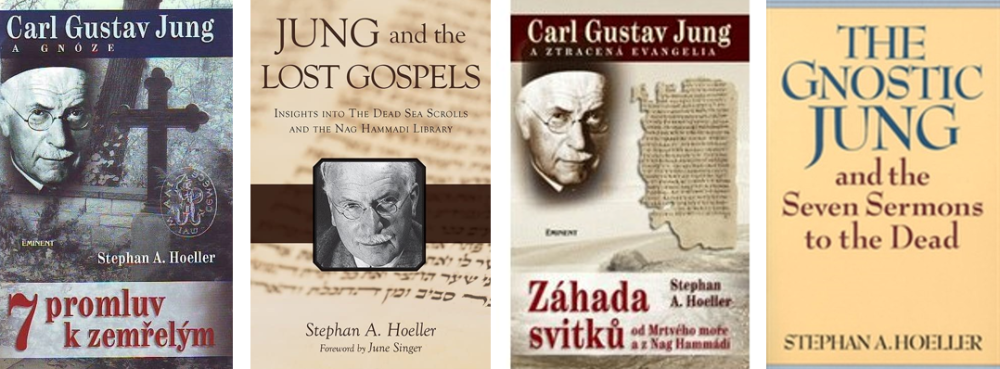
Jung’s historical role is central to Gnosticism. It was he who made a major effort to obtain the first codex from Nag Hammadi that bears his name – the Codex of Jung (Codex I, containing the Gospel of Truth) – in order to save it from destruction and make it accessible to the scientific community (Robinson, 1988).
In his depth psychology, he used Gnostic terms (the Demiurge as a reflection of the ego, the Pleroma as a symbol of the Self), but he did so quite transparently (Hoeller, 1982). Jung created an admitted Jungian hermeneutics. He never denied the Gnostic texts their original historical meaning, did not try to falsify them, nor did he claim that they were the historical dogmatics of the ancient Gnostics. He claimed the right to psychological interpretation without damaging the textual integrity of the sources.
The real problem: The modern esoteric movement has taken Jung’s psychological interpretation, merged it with quantum mysticism and ufology, and began to falsely claim this mutated construct to be „the original texts of Nag Hammadi.“ Cannibalization, therefore, is not the work of Jung, but of those who have lost historical and scientific respect for the sources.
5. Mechanisms of Cannibalization and the Economics of Gnostic Capitalism: A Detailed Deconstruction of the Conspiracy Industry
Behind these reinterpretations is not only naivety, but also a very lucrative business model. It is Gnostic capitalism that monetizes human spiritual distress through paid webinars, „awakening inner Sophia“ courses, and the sale of esoteric products. The main mechanisms of this fraud include twenty systematically built pillars:
Section A: Mechanisms of Digital Conspiracy and Pseudo-Historical Marketing
- The Illusion of Forbidden Knowledge (Marketing Fear): The modern esoteric industry is based on the narrative that mainstream science and churches have supposedly hidden the „true nature of human origins“ for millennia. New Age book authors and paid webinar creators like to talk about the „secret Nag Hammadi files“ as if they were forbidden scrolls locked in Vatican vaults. The codices from Nag Hammadi were discovered in 1945 and since the 1950s and 1970s they have been freely available in academic editions (e.g. The Nag Hammadi Library in English). However, charlatans deliberately conceal this fact, because the hallmark of „forbidden“ is a key marketing ingredient for the sale of cheap products.
- Monetization of paranoia (Gnostic capitalism in practice): Fear is the most effective tool for selling. The esoteric market has transformed the ancient concept of the Archons – cosmic guards of the material prison – into the modern threat of „invisible parasites“ and „extraterrestrial entities“ that suck people out. This artificially induced fear is followed by an offer of solutions: „activation of the shield against the Archons“, courses of „cleaning the energy field“ or meditation recordings for hundreds of dollars.
- Algorithmic reduction of theology to memes: The current environment of social networks (TikTok, Instagram Reels, YouTube Shorts) requires extreme brevity. Complex cosmological systems with three celestial orders and the theological disputes of the Copts are ground into striking „buzzwords“. Videos with captions such as „I found out that we are not humans, but prisoners in the Matrix under the control of the Archons“ generate millions of views. Algorithms prefer shocking abbreviations to boring but truthful philological analysis.
- Patriotic and anti-system hijacking: Some radical currents on the Internet link the Gnostic motif of the „perverted creator of the world (Demiurge)“ with specific political ideologies, government structures or supranational organizations. Religious metaphysics is thus misused for political radicalization and the spread of conspiracy theories about the control of humanity.
- Creating false lines of „initiation“: Internet gurus often claim to have „direct mediation of ancient wisdom“ from hidden masters called inner Gnostic orders or secret lodges. These lines are entirely fabricated; Their knowledge of Coptic is zero and they work with sources exclusively through poor English translations from the Internet.
Section B: Specific examples of distortion of selected terms
- Pleroma as a „quantum field“: In Gnostic texts, the pleroma is a transcendent, divine dimension of light and perfection, radically separated from our material world. However, modern esotericism associates this concept with quantum physics and claims that „the pleroma is actually a quantum field of infinite possibilities“, thus trying to add a scientific shine to its delusions.
- Yaldabaoth as a gray alien (Ufological mutation): In the Apocrypha of Genoa, Yaldabaoth is the first Archon, the lion-faced, and the blind creator of the material world. In the presentation of modern ufological esotericists, he becomes „the commander-in-chief of the Grey Aliens of Orion“, thus lying to people that the ancient Gnostics described abductions into flying saucers.
- Emanation as an „energetic channelling message“: Emanation was a strictly structured ontological process in ancient Platonism. Today’s New Age has turned it into „channeling“, where mentally unstable individuals write down delusions about what beings from higher dimensions are supposedly telling them, passing it off as lost writings.
- Cosmic amnesia as a „treatment of the inner child“: In Gnosis, forgetting the divine origin is a tragic state of cosmic prison. However, esoteric personal development courses flatten this existential terror to „a forgotten inner child who needs to be embraced“ as part of weekend psychotherapy.
- Soteriology as a manifestation of abundance (The Secret in a Coptic coat): The goal of Gnostic soteriology was the total abandonment of this corrupt world. However, the modern movement linking Gnosis to the „Law of Attraction“ claims that the divine spark in man serves to „manifest money, cars, and abundance,“ thus transforming the ancient desire for liberation into boundless materialism.
Section C: Psychological and Sociological Background of Quackery
- Defense mechanism against the meaninglessness of the universe: People find it difficult to bear the idea that the universe is indifferent and mechanical. While the Gnostics perceived the world as evil, but at least they knew a dramatic order, modern esotericists modify myths into the form of a „benevolent universe that cooperates with us“ so that they do not have to face the radical foreignness of antiquity.
- Narcissistic spirituality (I am more than others): The concept of the „divine spark“ in modern esotericism does not speak of humility, but of „you are the center of the universe and the awakened elite in the crowd of sleeping sheep“, which feeds the toxic narcissism of failing individuals.
- Academic cavalry vs. internet plagiarist: An abysmal difference between the work of coptologists and paleographers, who have been deciphering torn papyri for decades, and the internet blogger, who mindlessly copies foreign English texts without citations.
- Intellectual laziness as the engine of the market: Deep study requires hundreds of hours of demanding work with philosophy and philology. The esoteric market offers „fast food for the soul“ – three-minute videos promising to understand everything in five minutes, which feeds laziness.
- Creating false dictionaries and neoplasms: Mixing Gnostic words with Indian chakras, kundalini and psychological terminology into an impenetrable linguistic stew that cannot be scientifically verified, but sells well.
Section D: Strategies of Defense and Scientific Emancipation
- The Myth of the Persecuted „Original Church“: An ingrained esoteric myth claims that the Gnostics were Mírumum ecological mystics destroyed by the evil church. However, historical sources point to an extremely complex and internally fragmented set of sects whose clash with the early church was a complex theological struggle.
- Misuse of Jung’s work as an alibi for fraudsters: C. G. Jung interpreted the Gnostic myths as projections of the human subconscious, but he never claimed that the Gnostics thought of psychology as he did. Scammers use this as an alibi for their own delusions about alien parasites.
- The Ethics of Dealing with a Historical Source: The obligation of scientific ethics to separate the description of sources from one’s own fantasies is completely suppressed in esotericism; authors pass off their hallucinations as the objective content of ancient manuscripts.
- The crisis of critical thinking in the post-truth era: Subjective experience („I feel that it is true“) has prevailed over objective fact, creating an ideal breeding ground for the spread of pseudo-science, conspiracies and esoteric charlatanism.
- Manifesto for the Rehabilitation of True Ancient Foreignness: A Call to Accept the Fact that Ancient Gnosis Was Radically Different, Disturbing, and Elitist, and that the Attempt to Make It a „Warm Blanket for the Modern Esotericist“ is the greatest intellectual theft in the history of spiritual culture.
6. Conclusion: An Open Letter to Readers Against Esoteric Lies
Modern esotericism bases its authority on false martyrdom and systematic lies: „The Church has suppressed the Gnostics, and we now bring you their true, secret teachings.“
The fact is that contemporary esotericism is doing to the Nag Hammadi texts what Christian heresiologists once did – drastically distorting them for its own power and commercial purposes. They rip out attractive concepts, empty them, stuff them with modern psycho-energetic waste, and fraudulently label the result as original Gnosticism.
Why do these people do this? Because true historical Gnosticism is too complex, inconvenient and requires a deep study of the sources. They lie to their listeners, readers, viewers and viewers because the misuse of the ancient mystery garment is the easiest way to sell empty courses, esoteric books and pseudoscientific delusions. Esoteric hyenism towards culture and history destroys the critical thinking of the public.
The academic and religious studies community must not take an alibi position in this fight. If science resigns itself to defending the truth, the space will be completely dominated by charlatans. The task of this study was to show that rejecting convenient esoteric lies and returning to the laborious reading of primary sources in their true, uncompromising harshness is the only way to stop this intellectual theft. Let’s stop the cannibalization of the Gnostic vocabulary!
List of References (APA)
- Attridge, H. W., & MacRae, G. W. (1985). The Gospel of Truth. In J. M. Robinson (Ed.), The Nag Hammadi Library in English (pp. 37–58). Harper & Row.
- DeConick, A. D. (2016). The Gnostic New Age: How a Countercultural Spirituality Revolutionized Religion from Antiquity to Today. Columbia University Press.
- Elkhaldy, S. (n.d.). The Forces of Involution / Thought Parasites. The Alchemist Community.
- Gnostic Institute of Anthropology. (n.d.). What is Gnosis?
- Hanegraaff, W. J. (1996). New Age Religion and Western Culture: Esotericism in the Mirror of Secular Thought. Brill.
- Hoeller, S. A. (1982). The Gnostic Jung and the Seven Sermons to the Dead. Quest Books.
- Layton, B. (1987). The Hypostasis of the Archons. In The Gnostic Scriptures (p. 64 et seq.). SCM Press.
- Matthews, C. (2001). Sophia: Goddess of Wisdom, Bride of God. Quest Books.
- Meyer, M. (2007). The Nag Hammadi Scriptures. HarperOne. (Contains a translation of the Apocrypha of Genoa, NHC II, 1).
- Robinson, J. M. (1988). The Facsimile Edition of the Nag Hammadi Codices: Codex I. Brill.
- School of Gnostics. (n.d.). The Divine Spark: What You Truly Are.
- Sophia Foundation. (n.d.). About Sophia.
- The Goddess, The Witch & The Womb. (n.d.). Sophia, A Divine Feminine Archetype. Podcast.
- Turner, J. D. (2001). Sethian Gnosticism and the Platonic Tradition. Presses de l’Université Laval.
- Uniform Gnosis. (n.d.). Cosmology and Monad.
- Waldstein, M., & Wisse, F. (1995). The Apocryphon of John According to the Coptic Codex III from Nag Hammadi. Brill.