Introduction
Gnostic teachings offer a fascinating alternative view of the Divine – including the feminine divine principle, which has been neglected by traditional church doctrine. One of the central symbols of this divine feminine in Gnostic cosmology is the figure of Barbelo. Barbelo appears as the primordial emanation of the Most High God and represents the universal Divine Mother. In the so-called Barbelo-Gnosticism (Gnostic movements that worship Barbelo) emphasizes this feminine aspect of the Divinity – Barbelo as the feminine half of the fullness of the deity (Pleromatus) next to the invisible Father. This article presents the theological and spiritual message of Barbelo-Gnosticism in an engaging form, but with a professional basis. We will rely on the surviving Gnostic texts (e.g. Tripartite Treatise or the Secret Book of John) and modern studies (e.g. Textbook of Gnosticism 2.0 by Josef Šédl or Hanegraaff’s Dictionary of Gnosis and Western Esotericism), to explore the meaning of Barbelo as a divine emanation and feminine principle in God.
In short: Who is Barbelo? In Gnostic myth, Barbelo is the primordial radiation of God, the Primordial Thought and at the same time the feminine maternal element within the divine. As we shall see, Barbelo, together with the unknowable Father and the emanated Son, form the sacred Trinity at the summit of the spirit world. This Mother-Father principle emphasizes that the divine nature includes both male and female poles. From the point of view of the Gnostics, Barbelo has not only a cosmological role, but also a direct spiritual significance – she is understood as a loving Providence who cares for souls and brings them back to the Light of the pleroma. Let us now look into the Gnostic cosmology and uncover the mystery of Barbelo, the Divine Mother of the universe.
Barbelo as the Primordial Emanation and the Divine Mother
According to the Gnostic writings, the light of divinity arises from the absolute Unknown by a primordial emanation – that is Barbelo, the first radiation of the invisible Father. Barbelo is said to be „the divine Mother, the first Aeon to come forth from the Divinity“[1]. In the Secret Book of Genoa (a Sethian Gnostic text from the Nag Hammadi library), Barbelo is described as the Primordial Thought of God, a shining power that became the „womb of the universe“ – the spiritual source from which all existence originated[2]. Barbelo thus represents the universal mother and co-creator: with the Most High she gave birth to other divine emanations called aeons, and then, by uniting them, gave rise to a Son named Autogenes (i.e., the Self-Begotten, identified with Christ)[3]. This establishes the primordial divine family—Father, Mother, and Son—which stands at the very apex of the Gnostic universe or Pleromat (fullness of divinity)[4].
The name Barbelo probably comes from the Greek Barbēlō, although its exact meaning remains unclear. What is certain is that in the Gnostic texts it refers to the highest feminine principle – the primordial feminine being emanated from the absolute God[5]. The Gnostics who worshipped this being were called Barbelognostics (or Barbeloites) for their deep respect for the goddess Barbelo. Barbelo is depicted in the original myths as the radiant glory of divinity and the „Primordial Thought“ of the unknowable Father. The invisible and nameless God-Father in Gnostic cosmology manifests itself precisely through Barbelo – which is his Image and Primordial Expression. As one Gnostic revelation states: Barbelo was the first power, „the perfect glory of the ages… the primordial Thought (of God), His Image; She became the womb of the universe, for she was before everything, … the eternal Aeon… and the first to arise (from God)“[7]. In this poetic language, the Gnostics expressed that Barbelo, as the Divine Thought, was born before the creation of everything else, and thus became the matrix of all creation.
Barbelo is sometimes compared to the Holy Spirit in his maternal aspect or to the Wisdom of God (Sophia), but she stands even higher, right next to the original Father as his female counterpart[8][9]. In some Gnostic texts, it is also called Ennoia (Thought) or Pronoia (Providence), which emphasizes its role as the primordial intellect and the loving providential power that initiates all subsequent emanations[10]. Barbelo is therefore the Divine Mother – the cosmic progenitor – standing at the beginning of all existence.
The feminine principle in the pleroma: Barbelo as Mother-Father
The Gnostics conceived of the ultimate Deity as dual – encompassing both male and female elements. The figure of Barbelo therefore plays a key role: he represents the eternal feminine principle in God, complementing the masculine principle. In Gnostic cosmology, Barbelo is the universal Mother of all creation – the spiritual „womb“ from which all beings and emanations are born[11]. At the same time, however, Barbelo is described as an androgynous being, a „three-name androgyny“ in which both feminine and masculine aspects are united, and which thus transcends the usual categories of gender[12]. In the Gnostic texts, I even call it „Mother-Father“, because it combines the procreative maternal principle and the initial creative impulse of the Father in a single being[13]. In other words, Barbelo is both divine Mother and Father in one.
This paradoxical title suggests that, according to the Gnostics, the supreme God is the perfect unity of the masculine and the feminine, transcending the duality of genders. While orthodox Christianity emphasized exclusively the paternal (male) character of God, the Gnostics introduced a maternal, feminine element into the image of the Divinity, often overturning the social norms of the time. For example, in the Gnostic writing Pistis Sophia, Mary Magdalene appears as the bearer of wisdom (Sophia) and the one who best understands the teachings of Jesus – even better than the Apostle Peter[14]. This motif suggests that Gnostic communities recognized the spiritual authority of women (as long as they were filled with Sophia—divine wisdom) and their potential to transcend traditional patriarchal orders[14][15]. Thus, the Gnostic emphasis on Barbelo and the feminine principle of divinity also had a social impact within these movements – the sacred feminine was rehabilitated and valued as an equal part of divine fullness.
In the pleromate itself (divine fullness), Barbelo and the Father form the primordial couple, or syzygos. Their union at the top of the Pleromat symbolizes that the divine Unity embraces both polarities – God the Father and the Mother Goddess. The Gnostics expressed this idea precisely by the title „Mother-Father“ for the supreme Being[4]. Barbelo, as the feminine pole, ensures that the Divinity is not only paternal and transcendent, but also has a maternal, imminent face – caring, giving birth, loving wisely. This concept was revolutionary in the ancient context. Although the Church Fathers labeled the Gnostics as heretics, they could not deny that the Gnostic myths presented God in all its fullness—as both Father and Mother, thus offering a spiritual interpretation that embraced the feminine principle at the highest level of being.
Barbelo as Providence and Spiritual Light
Barbelo is not only a passive cosmic „matrix“, but also acts as an active divine Power – Primordial Thought and Providence (Pronoia), which continues to operate in the spiritual and material worlds. The Gnostic myth describes that the Invisible Spirit (the primordial Father) conceived the Thought in himself – and this Thought became a being, Barbela, who came before him and took pleasure in him[16]. God endowed Barbelo with the power to share with him in the creation of everything else. Barbelo is therefore called Divine Providence, for her role as an omniscient caregiver of creation, and at the same time the Primordial Thought – the intelligent feminine principle initiating further emanations and development of being[16].
The Gnostics worshipped Barbela not only as a transcendent Mother in the celestial pleromantic sphere, but also attributed to her a salvific and caring role towards souls stuck in the lower planes of existence[17]. In some Gnostic texts, Barbelo even descends herself to bring knowledge and light into the darkness of the material world. For example, in the Trimorphic Protennoia (found in the Nag Hammadi library), Barbelo speaks in the first person as the Incarnate Primordial Thought and reveals himself as a divine voice from on high: „I am the image of the Invisible Spirit, through me everything has its form; I am the Mother of Light whom He has ordained as a Virgin… I am the unspeakable womb…“[18]. With this mystical statement, Barbelo presents himself as an emanation that gives shape to all being and, at the same time, as a virgin Mother of Light. It is a vision reminiscent of the later Christian conception of Divine Wisdom (Sophia) or the Virgin Mary, but in the Gnostic interpretation Barbelo has an even more cosmic dimension – he is the primordial foundation and matrix from which the entire creation of light will emerge[19].
In Gnostic myths, Barbelo also plays the role of the Savior in secret. She is often identified with Pronoia – merciful Providence who intervenes in favor of souls imprisoned in matter. In the Secret Book of John, Barbelo-Pronoia appears as the one who descended three times into the lower worlds in order to awaken the spiritual seed in humanity and lead it out of the bondage of darkness. The Gnostics believed that there was a „spark of Barbelo“ in every human being—a hidden germ of divine light that had forgotten its origins but could be awakened. Barbelo, as the divine Mother and Providence, is the one who calls this spark back to herself. In other words, salvation in the conception of Barbelo-Gnosticism is not an external act of grace, but an epiphany – the soul’s remembrance of its divine origin and the return of that luminous seed to the pleromatic Light. Barbelo acts here as a light from above, which takes the form of knowledge (gnosis) in the mind of the seeking individual and awakens him to his true essence.
It is noteworthy that Barbelo also penetrates the Gnostic visions associated with Jesus Christ. For example, in the apocryphal Gospel of Judas, Judas recognizes Jesus as a being from the higher divine world and says to him: „I know who you are and where you came from. You are from the immortal kingdom of Barbelo.“[21][22]. This passage indicates that Jesus is understood by the Gnostics as the messenger of the pleromata of Barbelo – that is, a being coming from the realm of the Divine Mother who descended to earth. For the Gnostics, Barbelo thus represented the heavenly origin of the Savior and guaranteed that Christ’s message was the voice of both the Father and the Mother (hidden behind him). In some Gnostic texts, it is even stated that Christ and Sophia (Wisdom) are the united manifestations of the one divine being – in a sense, analogous to the Son and Barbelo, they represent the two sides of the same pleromanatic trinity. Barbelo is thus also the spiritual Mother of Christ – sometimes called the First Mind or the Precursor who co-produces Christ (Autogenes) in the beginning[23][24].
To sum up the spiritual meaning: Barbelo symbolizes Divine Love and Light, which cares for souls as a mother cares for her children. She is a merciful guide from the world of illusion back to the divine reality. By uniting Barbelo (Mother) and Christ (Son), the Gnostics saw the full image of the Saviour: the Logos (Word) of the Father who descends, and Sophia/Barbelo (Wisdom-Mother), who inspires and accompanies to redemption. According to this teaching, every person has a share in Barbelo – the Divine Spark within waiting to be awakened – and Gnostic spirituality consists precisely in awakening this spark through the knowledge that my origin is in Barbelo, in the divine pleromanatic unity of the Father-Mother.
Barbelo and the message for today
The doctrine of Barbelo as the feminine aspect of the Divinity is not only of historical and mythological significance, but also resonates with the present day. For centuries, the Gnostic texts and their visionary conception of the Divine Mother have been suppressed or forgotten – the official Church has branded the Gnostics heretics and their writings have been destroyed or hidden. It was not until the discovery of the Nag Hammadi library in 1945 that the entire treasure trove of these ancient teachings was revealed to the modern world. As a result, Gnostic ideas, including the idea of Barbelo, became more widely known and began to influence contemporary spiritual currents – from academic research through New Age to modern Gnostic churches[25]. It is interesting that in an era when society is trying to find a balance between the male and female principles (equality, female spirituality, etc.), there is a renewed interest in the Gnostic concept of the Divine Feminine. What was perceived in antiquity as a dangerous heresy undermining the patriarchal order is now sought by many as an inspiring alternative to a one-sided masculine image of God[26]. The Gnostic Goddess Barbelo is thus experiencing a renaissance – not only in academic circles, but also among spiritually seekers who see her as a symbol of the integrity of God.
In a modern digital community, such as our Facebook group, the study of Barbelo-Gnosticism can serve to deepen spiritual understanding. Barbelo reminds us of a forgotten truth: that the divine Light also has a female face, and that there is a piece of this light hidden in each of us – a spark of the divine Mother waiting to awaken. For contemporary Gnostics and esotericists, Barbelo represents an encouragement to seek God not only in heaven above as Father, but also within themselves as a Mother who cares, heals and leads to Knowledge. This message of Barbelo is profoundly topical: it teaches us about the unity of opposites, about the balance between the masculine and the feminine, the active and the receptive, reason and intuition – that is, the harmony that the modern world so desperately needs.
Barbelo-Gnosticism thus offers a rich source of inspiration even today. It teaches that true knowledge (Gnosis) involves understanding God in all His fullness – as Father and Mother, the Unity of the Two. It presents an image of the Divinity that is dynamic and complete: God is not a distant authoritarian ruler, but at the same time a loving Mother and Father, in whom we find our original origin. The study of these Gnostic ideas can help broaden the horizons of faith and spirituality, enrich our own inner life, and bring the Light of Understanding where the shadows of dogma used to be. Barbelo – the foremother of the Light – still speaks quietly to all who listen: she invites us to discover the divine spark within us, to awaken from the spiritual sleep of ignorance and to return to the fullness of the Light from which we come. „We do not belong to the darkness – our souls are children of Barbelo, the Divine Mother, and through her we return Home.“
Literature and sources:
- Apocryphal Gnostic texts from the Nag Hammadi library (esp. The Secret Book of Genoa, the Trimorphic Protennoia, the Tripartite Treatise), translations in: Biblioteca Gnostica.
- Šédl, J.: Textbook of Gnosticism 2.0 (Czech Gnostic Community, 2024) – an encyclopedic study of Gnosticism[27][28].
- Hanegraaff, W. J. (eds.): Dictionary of Gnosis & Western Esotericism (Brill, 2005).
- Andrew Phillip Smith: A Dictionary of Gnosticism (2009) – definitions of Barbelo and Barbelognostics[27].
- Pagels, Elaine: The Gnostic Gospels (1979) – a pioneering study of Gnosticism and the role of women.
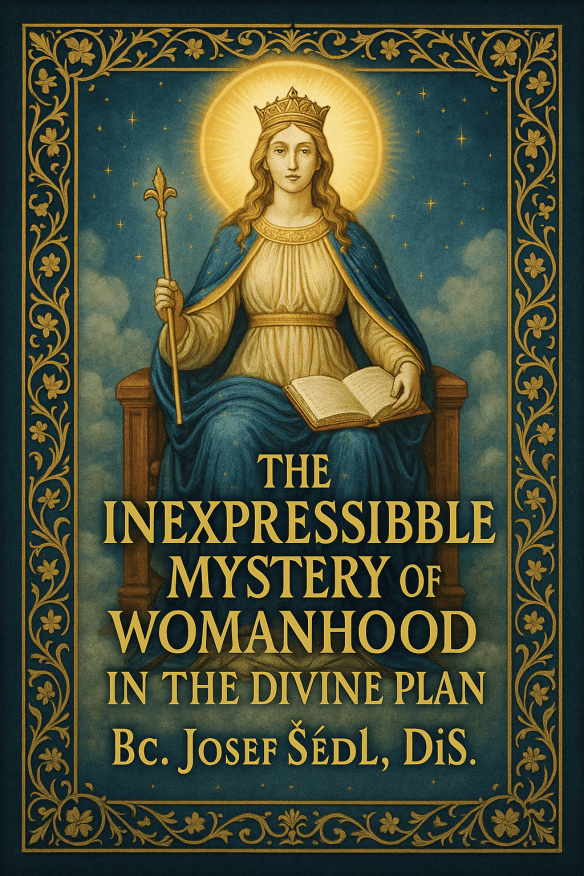
- Šédl, J.: The Inexpressible Mystery of Femininity in the Divine Plan (diploma thesis, 2025) – an analysis of the Gnostic concept of the feminine principle[29][17].
- Pistis Sophia – Gnostic text (3rd century), scenes with Mary Magdalene[14].
- The Gospel of Judas (Gnostic writing, 2nd century) – see, for example, the quotation about the „immortal kingdom of Barbelo“[21].
(Note: Numbers in square brackets refer to sources and pages of direct quotes or factual statements – see attached citations.)
[1] [6] [27] [28] EN Bc. Josef Šédl, DiS – TEXTBOOK OF GNOSTICISM 2.0.pdf
file://file-WbGn1rvSykdXcQ8R2hBWtR
[2] [3] [4] [5] [7] [8] [9] [10] [11] [12] [13] [14] [15] [16] [17] [18] [19] [20] [23] [24] [25] [26] [29] EN Bc. Josef Šédl, DiS. – THE INEXPRESSIBLE MYSTERY OF FEMININITY IN THE DIVINE PLAN.pdf
file://file-FuXJ9GoWjn3sPHvGos2UR7
[21] Gospel of Judas – Wikipedia
https://en.wikipedia.org/wiki/Gospel_of_Judas
[22] Jesus Laughing: The „Gospel“ of Judas?
https://www.goarch.org/-/jesus-laughing-the-gospel-of-judas-
 GNOSTICISMUS/GNOSTICISM 2025